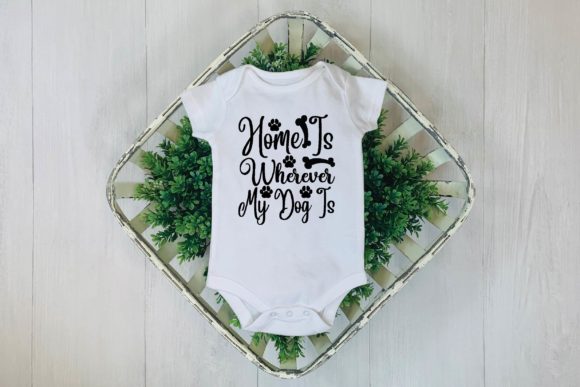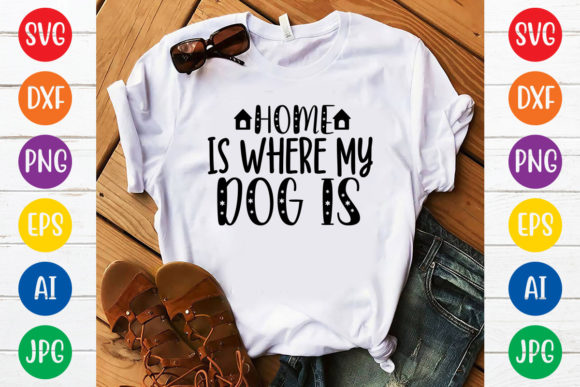
Home Is Where My Dog Is Svg Design
As a designer who’s stitched hundreds of custom pieces—from boutique baby onesies to Etsy best-selling tote bags—I opened Home is Where My Dog Is Svg Design expecting warmth, simplicity, and quiet charm. What I found was exactly that: a clean, centered phrase with gentle spacing, modest letter height, and no distracting flourishes—just soft confidence in its message. It doesn’t shout. It smiles. That matters—especially when you’re translating it into thread.
A Real-World Test: Embroidering This on a Linen-Cotton Kitchen Towel
Last week, I used Home is Where My Dog Is Svg Design for a small-batch run of embroidered kitchen towels—meant as holiday gifts for dog-loving friends and a limited drop in my craft shop. The fabric was medium-weight linen-cotton blend: slightly textured, low stretch, but not ultra-smooth like satin. I hooped it with medium tear-away stabilizer, chose a matte cotton thread in warm charcoal, and ran the design at 3.8" wide (centered on the towel’s lower third).
The result? Crisp, legible, and emotionally resonant. No letters bled or feathered. No gaps between strokes. The spacing held up beautifully—even where the “o” in “Home” sat near the curve of the “g” in “Dog.” That tells me this isn’t just a pretty vector—it’s thoughtfully spaced for real-world stitch translation.
Where This Design Shines (and Where It Needs Care)
Home is Where My Dog Is Svg Design works especially well for:
- Custom apparel on crewneck sweatshirts and relaxed-fit tees—its moderate width and open lettering avoid bulk and maintain breathability;
- Embroidered patches (woven or standard machine-embroidered) —the clean lines translate cleanly into border-defined shapes;
- Baby embroidery on organic cotton burp cloths or knit caps—its gentle scale fits tiny garments without overwhelming;
- Nursery decor like pillow covers and framed hoop art—its sentiment pairs naturally with soft palettes and minimal styling;
- Holiday embroidery on tea towels, aprons, or canvas gift bags—feels personal, not mass-produced.
But it’s not universally forgiving. Use caution with:
- Small hoop sizes under 4”—the full phrase loses legibility below ~3.2”, especially on dense fill-stitch versions;
- Highly textured fabrics like bouclé or heavy terry cloth—the fine internal spacing can blur if stabilizer isn’t precisely matched;
- Stretchy knits (e.g., ribbed baby onesies or performance tees)—requires cut-away stabilizer and slower stitching speed to prevent distortion;
- Dark fabric without high-contrast thread—the lowercase “i” and thin crossbars in “is” fade if thread lacks brightness or sheen;
- Curved surfaces like caps—the horizontal linearity means careful digitizing or repositioning is needed to avoid stretching or compression.
What This Design Says About Your Finished Product
When customers see Home is Where My Dog Is Svg Design stitched cleanly on a handmade item, they don’t just read words—they feel intention. It signals care, personality, and emotional resonance. That lifts perceived value. A $28 embroidered tote bag feels like a keepsake, not a novelty. A $42 personalized sweatshirt becomes a gift you’d wrap twice.
It also supports brand consistency—especially for Etsy sellers or small shops built around pet-centric, cozy, or lifestyle themes. Unlike overly cutesy or cartoonish graphics, this design avoids trend fatigue. It’s timeless enough for repeat listings, seasonal bundles, and even subtle branding on packaging tags or thank-you cards.
That said, its strength is in restraint—not versatility. Don’t expect dramatic monogram integration or scalable layering like an applique design would offer. It’s a statement phrase, not a system. And while it’s listed under T-Shirt Designs, its true home is broader: Graphics meant for thoughtful placement, not filler prints.
Practical Embroidery Designer Notes You’ll Want to Keep Handy
Before cutting thread or listing your next batch, consider these real-use checks:
- Test on scrap fabric first—especially if using textured, dark, or stretchy materials;
- Review stitch density—if converting from SVG to embroidery file, confirm fill areas aren’t over-dense for lightweight fabrics;
- Confirm hoop size compatibility—the original SVG scales well, but always verify your final stitch file fits your smallest working hoop;
- Inspect small details—look closely at the dot over the “i”, the crossbar in “t”, and spacing between “My” and “Dog” in your embroidery software preview;
- Test black-and-white mockups—this design relies on contrast and clarity, not color complexity;
- Compare light vs. dark backgrounds—try both ecru and navy fabric swatches in your printable mockup to gauge thread choice;
- Use proper stabilizer—medium tear-away works for stable wovens; switch to cut-away for knits or delicate linens;
- Verify licensing—since this is a digital embroidery file, confirm whether commercial use (e.g., selling finished embroidered products or digital bundles) is permitted before scaling your craft business;
- Check file formats—you’ll receive an AI file and layered SVGs, but remember: these are starting points. You’ll need to digitize them properly for machine embroidery—don’t assume auto-digitizing tools will preserve spacing or readability.
In short: Home is Where My Dog Is Svg Design isn’t flashy—but it’s reliable, emotionally grounded, and quietly versatile. It’s the kind of design that makes your handmade product feel like a promise kept. Not every embroidery file earns that trust. This one does—when used with attention, care, and the right context.